


Athlete Strength and Speed Training: 18 Questions Parents Ask

Parents regularly ask whether their athletes are old enough to lift weights, whether speed can actually be improved and whether more training will interfere with their sport.
The short answer is that young athletes can improve strength, speed, coordination and confidence when training is age-appropriate, progressive and properly coached. Training children like miniature professional athletes, however, is not the answer.
At FAST Athletics, we train youth, middle-school, high-school and college athletes from hockey, soccer, baseball, softball, lacrosse, wrestling, football, track and other sports. These are the questions parents ask us most often about youth strength and speed training.
Can My Athlete Actually Become Faster?
Yes. An athelte can become faster through properly designed training.
Genetics influence an athlete’s starting point and long-term potential, but speed is not completely predetermined. Acceleration mechanics, sprinting technique, coordination, strength, power and the ability to apply force into the ground can all improve.
Effective speed training should include:
High-quality sprinting
Acceleration mechanics
Maximum-speed exposure
Strength and power development
Appropriate rest between sprints
Objective testing
Coaching based on the athlete’s age and ability
Simply running more is not always speed training. Athletes must practice moving fast while they are fresh enough to produce high-quality efforts.
Is Speed Genetic, or Can It Be Trained?
Speed is influenced by both genetics and training.
Athletes are born with different proportions, muscle characteristics and natural coordination. Those differences matter, but they do not mean an athlete’s speed is fixed.
Training can improve how an athlete:
Positions the body during acceleration
Applies force into the ground
Coordinates the arms and legs
Produces and absorbs force
Maintains posture at higher speeds
Uses strength during athletic movement
The more useful question is not, “Was my child born fast?” It is, “Has my child developed the qualities required to reach their individual speed potential?”
What Age Should a Child Start Speed Training?
Children can begin age-appropriate speed development once they can listen, follow directions and participate safely.
For athletes ages 7–11, speed training should emphasize coordination, running mechanics, reaction, balance, jumping, landing and confidence. Training should be engaging while still teaching real athletic skills.
As athletes mature, their training can become more structured and include:
Timed acceleration
Maximum-speed sprinting
Resisted sprints
Deceleration
Change of direction
Plyometrics
Progressive strength training
An eight-year-old and a sixteen-year-old can both train speed, but their sessions should not look the same.
What Is the Difference Between Speed Training and Conditioning?
Speed training develops how fast an athlete can move. Conditioning develops how long the athlete can continue working and how quickly they recover between efforts.
True speed training typically uses short, fast efforts followed by enough recovery to maintain speed and technique. When rest is too short and every repetition becomes slower, the session becomes conditioning.
Both qualities matter, but they serve different purposes.
If athletes only perform tired sprints, they become accustomed to running while fatigued. To improve maximum speed, athletes also need opportunities to move at or near their fastest velocity.
A difficult workout is not automatically an effective speed workout.
How Often Should a Young Athlete Perform Speed Training?
Most young athletes can benefit from one to three speed exposures per week, depending on their age, experience, sport schedule and the intensity of each session.
That does not mean every exposure must be a full speed workout.
A week could include:
One structured acceleration session
One maximum-speed exposure
Short sprints incorporated into another training session
Quality matters more than accumulating large amounts of sprinting. Athletes need adequate recovery between demanding speed sessions, especially during their competitive seasons.
At FAST, we consider the athlete’s practices, games, tournaments and other training before determining the appropriate frequency.
How Long Does It Take for a Child to Become Faster?
Some athletes improve their sprinting technique and confidence within several sessions. Meaningful changes in strength, power and consistently measured speed usually require several weeks or months of regular training.
The timeline depends on:
The athlete’s starting point
Age and physical development
Training attendance
Sprinting experience
Strength levels
Sleep and nutrition
Sport and competition schedule
Quality of coaching
Parents should be cautious of programs guaranteeing a specific speed increase within a fixed number of weeks. Athletic development is not identical for every child.
Consistent training over time produces more dependable results than a few extremely difficult workouts.
What Exercises Help Young Athletes Get Faster?
The most important exercise for improving sprint speed is sprinting.
Strength exercises, jumps, resisted sprints and movement drills can support speed development, but they should not completely replace high-quality running.
A complete speed-development program may include:
Short accelerations
Flying sprints
Hill or sled sprints
Jumps and bounds
Squat and hinge variations
Split squats and lunges
Step-ups
Calf and ankle-strength exercises
Hamstring-strength exercises
Trunk and upper-body training
Exercise selection should match the athlete’s age, training history and current needs. The best exercise is not automatically the most complicated one.
Does Strength Training Help Young Athletes Become Faster?
Strength training can support speed by improving an athlete’s ability to produce, transfer and absorb force.
Acceleration requires athletes to apply force into the ground. Deceleration requires them to control force. Strength is important on both sides of that equation.
However, getting stronger does not automatically guarantee that an athlete will sprint faster. Athletes must also practice sprinting so they learn to apply their improved strength at high speed.
That is why FAST combines strength development with acceleration, top-speed training, jumping, deceleration and change of direction.
What Age Should Children Start Strength Training?
There is no single minimum age that applies to every child.
A child may be ready for structured strength training when they can follow directions, control their body and participate safely with qualified supervision.
Early strength training may include:
Bodyweight movements
Crawling and carrying
Jumping and landing
Medicine-ball exercises
Resistance bands
Light dumbbells or kettlebells
Technique-focused resistance exercises
As athletes demonstrate good movement and training habits, resistance can be increased gradually.
The American Academy of Pediatrics states that children can benefit from appropriately prescribed and supervised resistance training. Readiness and supervision are more important than selecting one universal starting age. American Academy of Pediatrics guidance
Is Strength Training Safe for Children?
Properly designed and supervised strength training can be safe and beneficial for children and adolescents.
Safety depends heavily on how the program is coached. Important factors include:
Qualified supervision
Age-appropriate exercises
Correct technique
Gradual progression
Appropriate resistance
Reasonable training volume
Equipment that fits the athlete
An environment that discourages reckless lifting
The National Strength and Conditioning Association supports youth resistance training when programs are properly designed and supervised. NSCA youth resistance-training position statement
Strength training and competitive weightlifting are also not the same thing. A youth athlete can build strength without attempting maximal lifts or participating in a weightlifting competition.
Will Lifting Weights Stunt a Child’s Growth?
Properly supervised strength training has not been shown to stunt a child’s growth.
This concern often comes from confusing responsible resistance training with injuries caused by unsupervised lifting, inappropriate loads or poor technique.
Children already encounter force when they sprint, jump, land, cut, wrestle and play sports. Strength training provides a controlled environment in which they can learn to produce and manage force.
The goal is not to see how much weight a child can lift. The goal is to help the athlete become stronger while maintaining good positions and technique.
Will Weightlifting Make My Child Slower or Less Athletic?
Appropriate strength training should not make a young athlete slow.
An athlete may temporarily feel tired or sore after a new training stimulus, but a properly balanced program should improve the physical qualities that support athletic movement.
Problems can occur when a program:
Adds excessive muscle mass without considering the sport
Uses too much training volume
Creates constant soreness
Eliminates sprinting and jumping
Focuses only on lifting heavier weights
Ignores mobility and movement quality
At FAST, strength training is one component of athletic development. Athletes also sprint, jump, decelerate, change direction and move explosively.
The goal is not to create better weight-room athletes. It is to create stronger, faster and more capable sport athletes.
How Often Should a Young Athlete Strength Train?
For many youth athletes, two strength sessions per week can provide a productive starting point.
Some athletes may train more frequently when sessions are divided appropriately throught the week. Others may need only one weekly session during a demanding competitive season.
The correct frequency depends on:
Age and development
Previous training experience
Sport schedule
Practice and game volume
Training intensity
Sleep and recovery
The athlete’s goals
Training more frequently is only useful when the athlete can recover from it. The purpose of a program is to create adaptation—not simply to accumulate workouts.
Can Athletes Train Strength and Speed on the Same Day?
Yes. Strength and speed can be trained effectively during the same session.
When both are included, high-speed and highly technical work is usually performed early, before fatigue reduces the quality of movement. Strength work can follow after the athlete completes the speed or power portion of the session.
A combined session might include:
Movement preparation
Sprint mechanics
Acceleration or maximum-speed work
Jumps or throws
Lower- and upper-body strength
Mobility or recovery work
The correct sequence depends on the session’s primary goal and the athlete’s needs.
Should My Child Train During Their Sports Season?
Yes, but in-season training should account for practices, games, tournaments and recovery.
Athletes who completely stop strength and speed training during every sports season may lose qualities they developed during the offseason.
In-season training can help athletes maintain:
Strength
Speed exposure
Power
Movement quality
Physical readiness
The volume should normally be lower than it is during an offseason. The goal is to support sport performance, not make the athlete excessively tired or sore.
Parents should communicate competition schedules to the performance coach so training can be adjusted around demanding weeks.
Can My Child Do Too Much Training?
Yes. More training is not always better.
Warning signs that an athlete’s total workload may be too high include:
Declining performance
Persistent soreness
Unusual fatigue
Loss of motivation
Difficulty sleeping
Irritability
Repeated minor injuries
Dreading practices or training
Inability to recover between sessions
Parents must consider the athlete’s entire schedule—not just performance training. Club practices, school teams, private lessons, tournaments and additional workouts all contribute to total stress.
Effective training applies enough stress to create improvement while still allowing recovery.
How Can Parents Tell Whether Speed Training Is Working?
Parents should look for both measurable improvement and better movement.
Signs of progress may include:
Faster acceleration times
Higher maximum speed
Better sprinting positions
Improved coordination
Greater confidence
More forceful movement
Better deceleration
Improved change-of-direction times
Increased strength or power
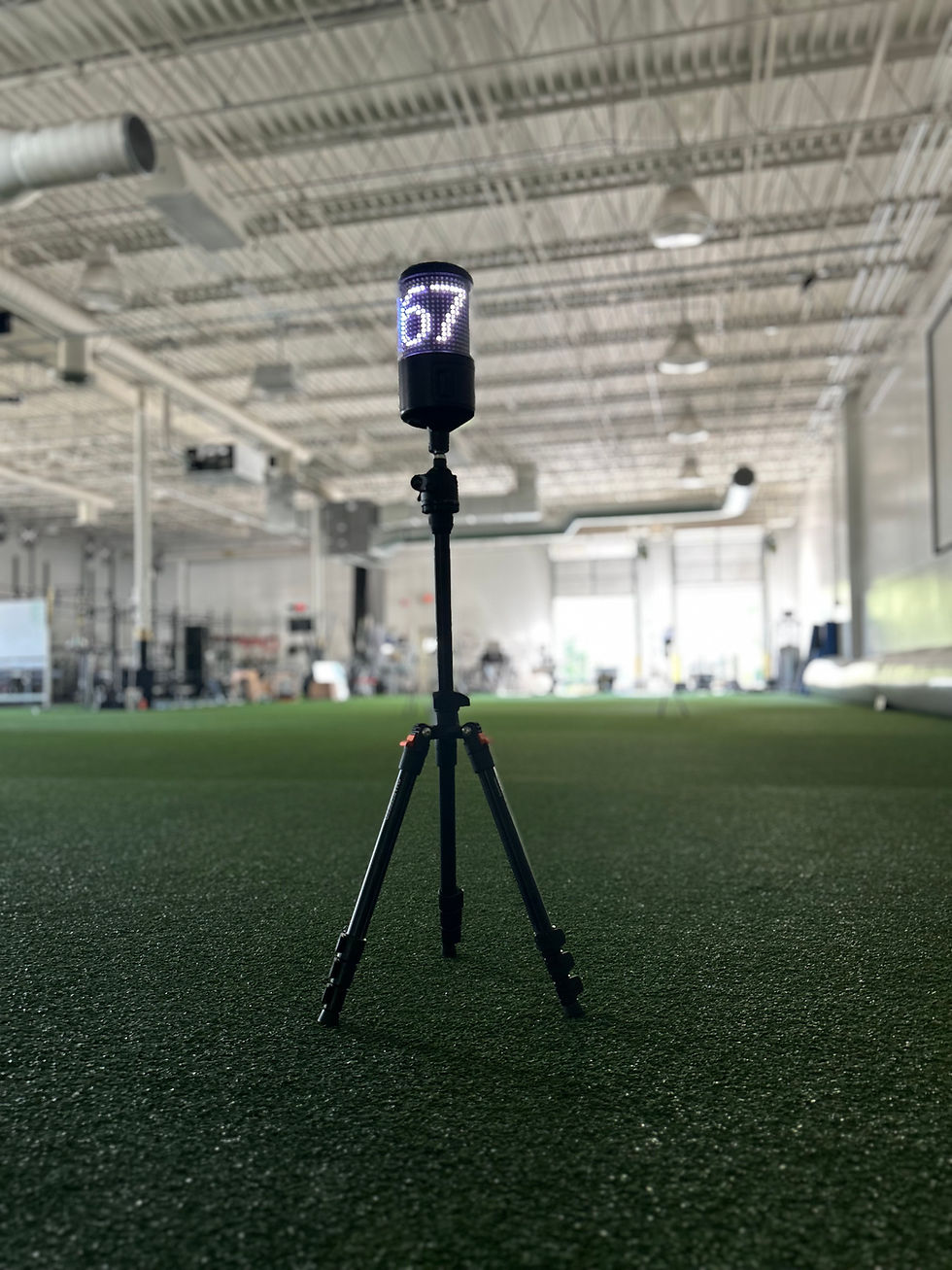
Objective testing is important because visual impressions can be misleading. Timing gates provide a more reliable measurement than hand timing and help coaches compare an athlete’s results over time.
At FAST, testing is used to establish a baseline, identify areas for improvement and evaluate whether training is producing the intended result.
Testing should guide coaching—not simply create rankings.
What Athletic-Performance Tests Should Young Athletes Take?
Testing should match the athlete’s age, sport and training goals.
Useful assessments may include:
Short acceleration sprints
Flying sprints for maximum speed
Change-of-direction tests
Vertical or horizontal jumps
Lower-body strength
Upper-body strength
Movement and coordination observations
At FAST, our primary speed and movement assessments can include the 5+10-yard fly, 10-yard fly, 5-10-5 change-of-direction test and vertical jump. We also evaluate strength and movement based on the athlete’s age and training level.
No single test completely defines an athlete. The value comes from combining several measurements with qualified coaching observations.
Is Private Training or Small-Group Training Better?
Both formats can work. The best choice depends on the athlete and the quality of coaching.
One-on-one training provides constant individual attention but can be more expensive and may lack the energy created by training around other athletes.
Large-group classes can be affordable but may provide limited coaching if too many athletes are assigned to one coach.
FAST uses a private small-group model, generally with approximately six to eight athletes per coach. Athletes receive individual exercise adjustments and coaching while benefiting from the energy, competition and social environment of a group.
Parents should ask:
How many athletes are assigned to each coach?
Does every athlete complete the exact same workout?
Are exercises adjusted for age and ability?
How is progress measured?
Will the coach know my child’s needs and goals?
The format matters less than whether the athlete receives appropriate programming, useful feedback and consistent coaching.
What Should Parents Look for in a Youth Strength and Speed Program?
A quality program should provide more than equipment, cones and hard workouts.
Parents should look for:
Qualified, engaged coaches
Age-appropriate training
A manageable athlete-to-coach ratio
Clear exercise progressions
Actual sprinting during speed training
Adequate recovery between speed repetitions
Strength, power and movement development
Objective testing
Communication with parents
Adjustments for sport schedules
An environment where the athlete feels supported
Parents should be cautious when a program promises guaranteed results, treats exhaustion as the main goal or gives every athlete the same workout regardless of age and ability.
What Is the Best Strength and Speed Program for My Child?
The best program is one that matches your child’s age, experience, goals, sport schedule and current physical needs.
It should challenge the athlete without overwhelming them. It should also be a place where the athlete wants to train consistently.
Before enrolling, ask the coach:
What does my athlete currently do well?
What qualities need the most improvement?
Which training group is the best fit?
How often should my athlete attend?
How will exercises be individualized?
How will progress be measured?
How will training change during the sports season?
A trial or athlete assessment should provide answers to those questions—not simply function as a sales appointment.
Youth Strength and Speed Training in Minnetonka, Minnesota
FAST Athletics helps youth, middle-school, high-school and college athletes develop:
Acceleration
Maximum speed
Strength
Power
Deceleration
Change of direction
Mobility
Movement confidence
Our athletes train in a coached small-group environment with programming adjusted to their age, ability and goals. We also use objective performance testing to establish baselines and measure progress.
If you are unsure whether your child needs speed training, strength training or both, schedule an athlete assessment with FAST Athletics. We will evaluate your athlete’s current needs and recommend the most appropriate training option.
About the Author
Jayme Pantekoek is the owner of FAST Athletics in Minnetonka, Minnesota. He is a former Division I decathlete and former college strength coach with experience conducting on-ice performance testing with the Tampa Bay Lightning. FAST Athletics specializes in youth, speed development, strength training, power, change of direction and objective athletic-performance testing.
By Jayme Pantekoek, Owner of FAST Athletics in Minnetonka, Minnesota Updated: September 2026


Comments