


Best Exercises to Improve Vertical Jump, Acceleration, Top Speed, and Change of Direction


Athletes often ask a simple question: What exercises will make me more explosive, faster, and better at changing direction?
The honest answer is that no single exercise creates athletic performance by itself. A bigger squat does not automatically produce a faster sprinter, and doing more box jumps does not guarantee a higher vertical jump. The best results come from training the physical qualities that each athletic action requires—and then teaching the athlete to apply those qualities at game speed.
At FAST Athletics, we organize training around four major performance qualities:
Vertical jump and total-body power
Acceleration
Top speed, also called maximum velocity
Change of direction
Here is how different exercises support each quality.
1. Vertical Jump and Power: Build Maximum Force—and Express It Quickly
A strong vertical jump begins with an athlete's ability to create a large amount of force through the ground. This is why foundational strength and explosive lifting are important parts of power development.
Exercises we commonly use include:
Hex-bar deadlifts
Squats
Power cleans and clean variations
Loaded jumps
Olympic-lift derivatives
Heavy hex-bar deadlifts and squats help build the lower-body strength needed to produce more force. Power cleans and other explosive lifts teach athletes to apply force rapidly instead of simply moving a heavy weight slowly.
The goal is not to turn every athlete into a powerlifter or competitive weightlifter. The goal is to improve the athlete's ability to produce high levels of force and then convert that strength into explosive movement.
2. Acceleration: Produce Force Horizontally
Acceleration is the ability to build speed over the first several steps. During this phase, athletes use aggressive forward angles and push backward into the ground to propel the body forward.
Exercises that can support acceleration include:
Hex-bar jump squats with approximately 20–30% of body weight
Sled pushes at 20-30% body weight and resisted sprints
Light band-resisted jumps
Broad jumps and horizontal bounds
Short, powerful sprint starts
Moderately loaded jump squats can help athletes produce force quickly while still moving at high velocity. Sled work reinforces projection angles and horizontal force application. Light resisted jumps and horizontal plyometrics help bridge the gap between strength training and explosive sprinting.
Loading should always be individualized. If the resistance causes the athlete to move slowly, lose posture, or change the intended movement, it is no longer training the same quality effectively.
3. Top Speed: Create Force in Very Little Time
Top-speed sprinting is different from acceleration. Once an athlete reaches maximum velocity, the body is more upright, the limbs move extremely quickly, and each foot spends very little time on the ground.
Top-speed development requires adequate hip strength, front-side mechanics, elastic stiffness, and the ability to create force during extremely short ground contacts.
Exercises we use to support maximum velocity include:
Banded hip thrusts and glute bridges
Psoas and hip-flexor training
High-speed hamstring work
Ankling, pogos, and stiffness-based plyometrics
Max-effort plyometrics performed with ground-contact times below approximately 0.18 seconds
Upright sprinting and flying sprints
The glutes help athletes apply force into the ground, while the psoas and other hip flexors help reposition the leg rapidly for the next stride. Fast plyometrics train the lower leg and foot to behave like a stiff, reactive spring.
The key is intent and contact time. If an athlete sinks too deeply or stays on the ground too long, the drill may still be useful for power—but it is no longer closely matching the demands of maximum-velocity sprinting.
4. Change of Direction: Brake, Stabilize, and Reaccelerate
Change of direction is more than moving side to side. Athletes must first absorb force, control their center of mass, create an effective plant angle, and then push out in a new direction.
Exercises that can support change-of-direction ability include:
Reactive lateral drills
Band-resisted lateral movement
Lateral bounds and skater jumps
Single-leg squats and split-squat variations
Hip-abductor and adductor strengthening
Deceleration and reacceleration drills
Band resistance can strengthen the hips and challenge an athlete's ability to maintain position. Lateral plyometrics teach athletes to absorb and redirect force. Reactive drills add the perception and decision-making component that planned cone drills often miss.
That final piece matters. In sports, athletes rarely know exactly when or where they will have to cut. They must react to an opponent, teammate, puck, or ball. Once athletes can execute the movement safely, change-of-direction training should include visual or verbal reactions—not just memorized patterns.
The Exercise Is Only One Part of the Program
The most effective programs do not choose exercises because they look athletic. They choose exercises based on the athlete's needs and the physical quality being trained.
At FAST Athletics, we look at questions such as:
Does the athlete need more strength or faster force production?
Is the athlete struggling with projection during acceleration?
Can the athlete create enough force during short ground contacts at top speed?
Can the athlete decelerate and control the body before changing direction?
Does the athlete maintain good technique as speed and intensity increase?
Strength, plyometrics, sprinting, and reactive movement all have a place. The key is using the right exercise, with the right load, at the right time—and connecting it to actual sprinting, jumping, and sport movement.
Train the Quality. Test the Result.
Athletic development should be measurable. Rather than guessing whether a program is working, athletes should be tested in the qualities they are trying to improve.
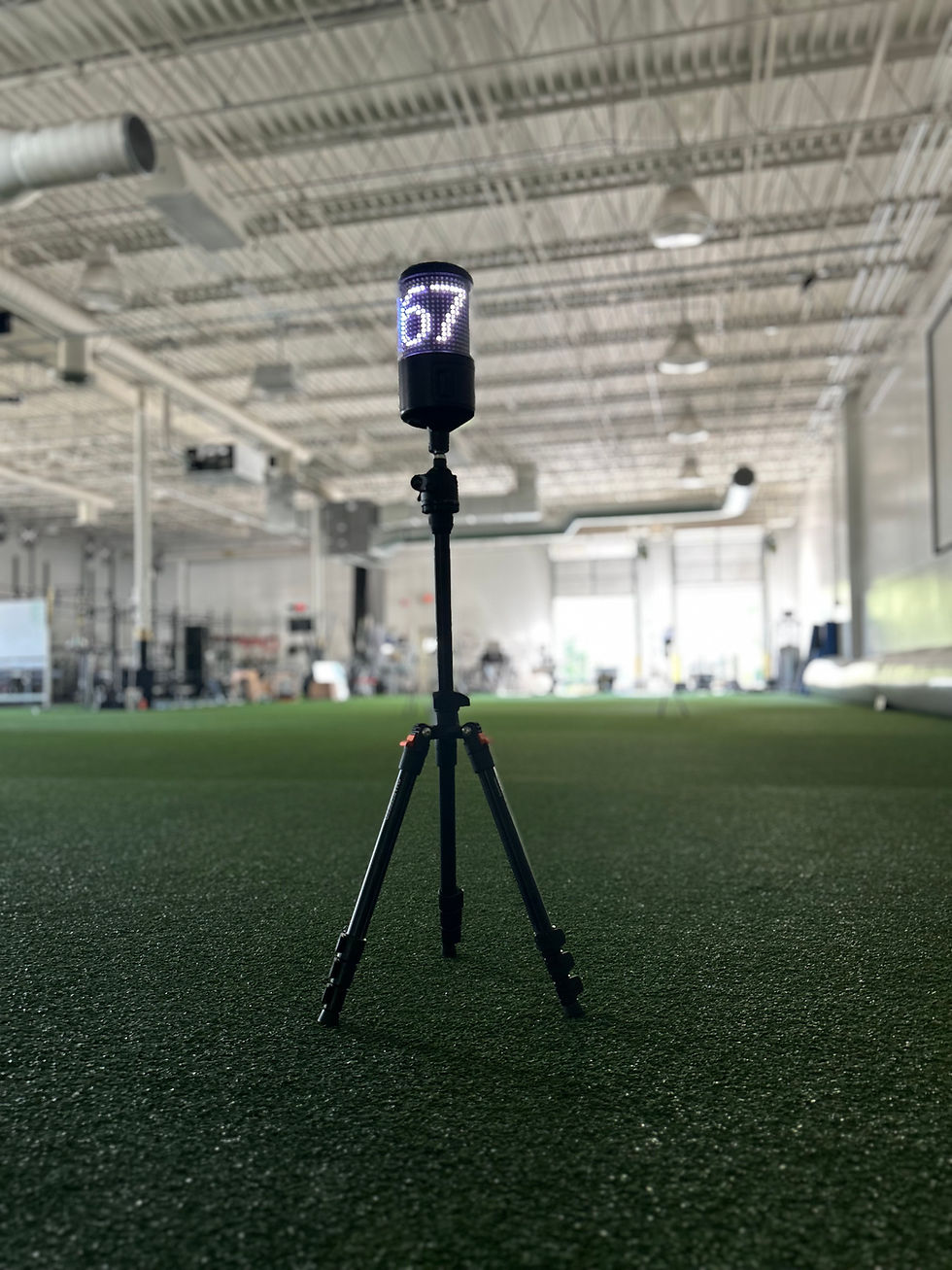
At FAST Athletics, that can include vertical jump, acceleration, flying sprint speed, and change-of-direction testing. The results help us identify what an athlete needs, build a more targeted program, and track whether that program is transferring to performance.
Want to learn which physical qualities are limiting your athlete? Contact FAST Athletics to schedule an athlete assessment. Contact: jayme@getfastmn.com 612-839-8039
Serving Minnetonka, Hopkins, Wayzata, Orono, Eden Prairie, St Louis Park, Maple Grove, Mound and Chanhassen


Comments